
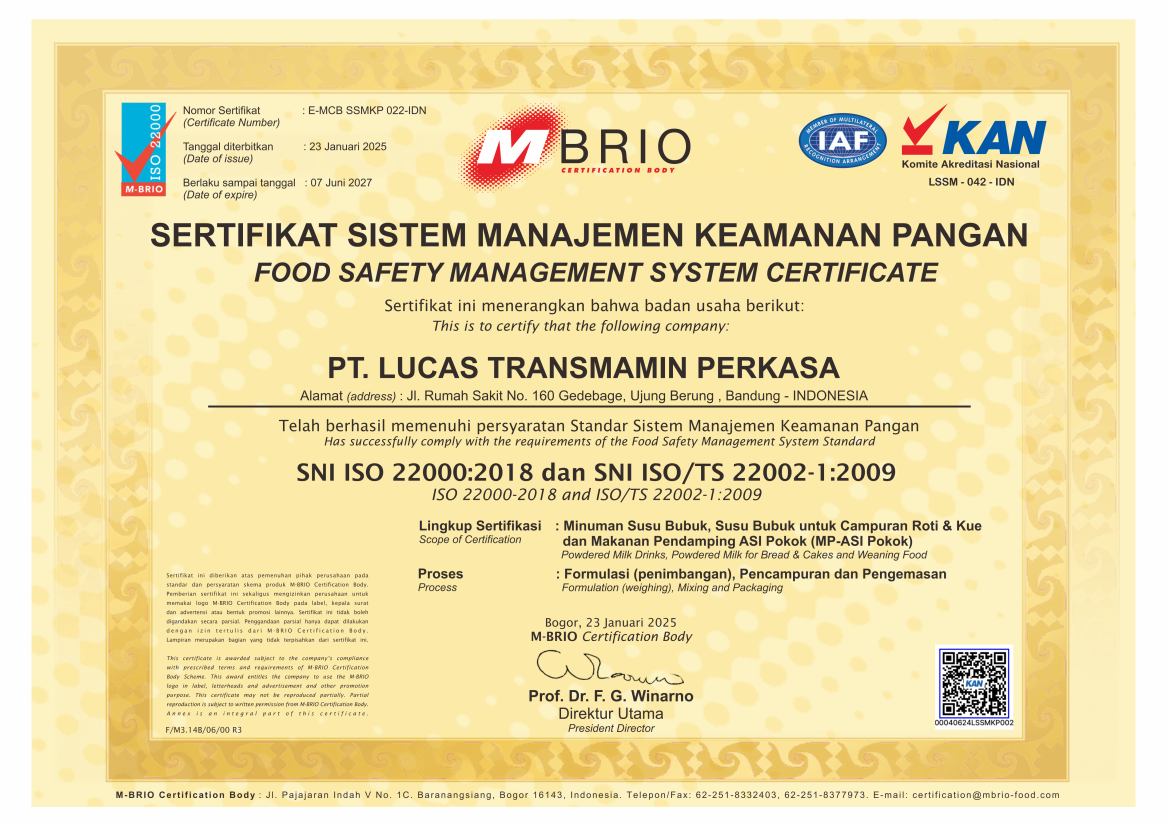
Indonesian Food Safety Certificate
In Indonesia, food safety certificates are official recognition of product quality assurance and safety, including SPP-IRT, BPOM registration, Halal certification, HACCP, and ISO 22000. These certificates are essential for building consumer trust and enhancing product competitiveness. They are obtained through official authorities such as BPOM, local governments, or authorized certification bodies, following audits, training, and the implementation of required standards.
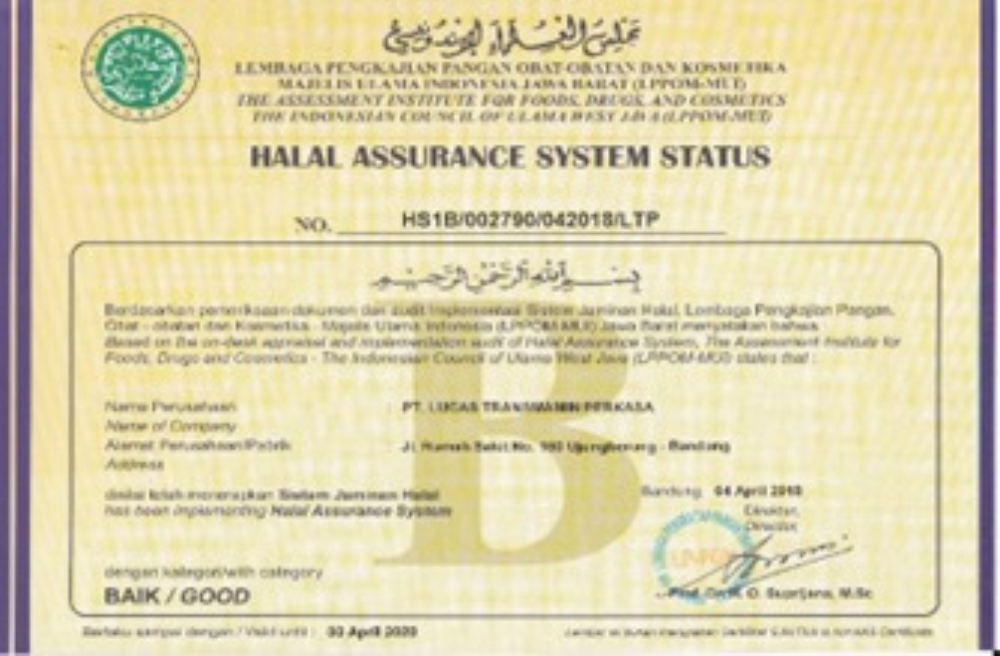
Halal Product Certificate
Halal certification is the official recognition process of the halal status of products such as food, beverages, medicines, cosmetics, and consumer goods, issued by the Halal Product Assurance Organizing Agency (BPJPH) based on the halal fatwa from the Indonesian Ulema Council (MUI). It serves as assurance that both raw materials and the production process comply with Islamic law.
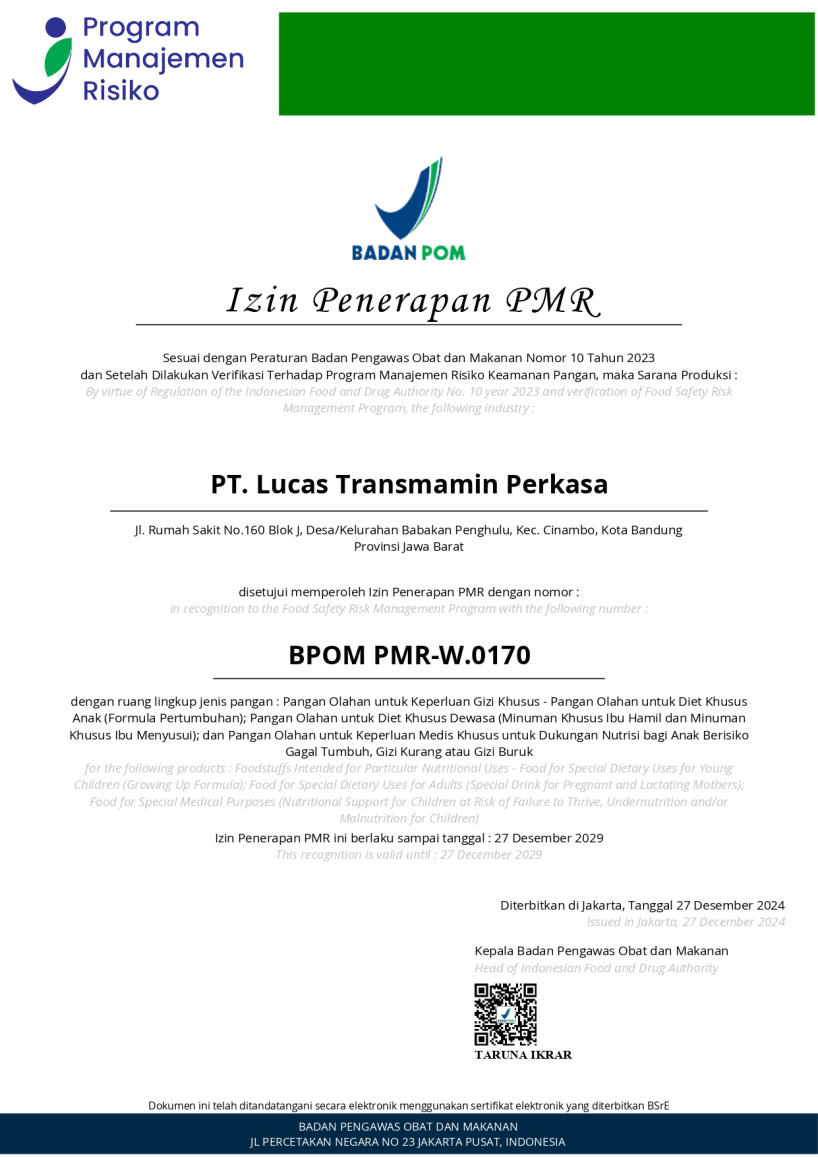
BPOM Permit Certificate
BPOM certification is a guarantee of legality and safety issued by the National Agency of Drug and Food Control (BPOM) for food, beverages, medicines, and cosmetics circulating in Indonesia. This certification ensures that products have undergone rigorous testing, are safe for consumption, and help build consumer trust and enhance product competitiveness.